
Home/Services/E-commerce apps & integrations
Shopify, WooCommerce and e-commerce app development
If your product serves online retailers, the fastest route to them is the platform they already run their shop on.
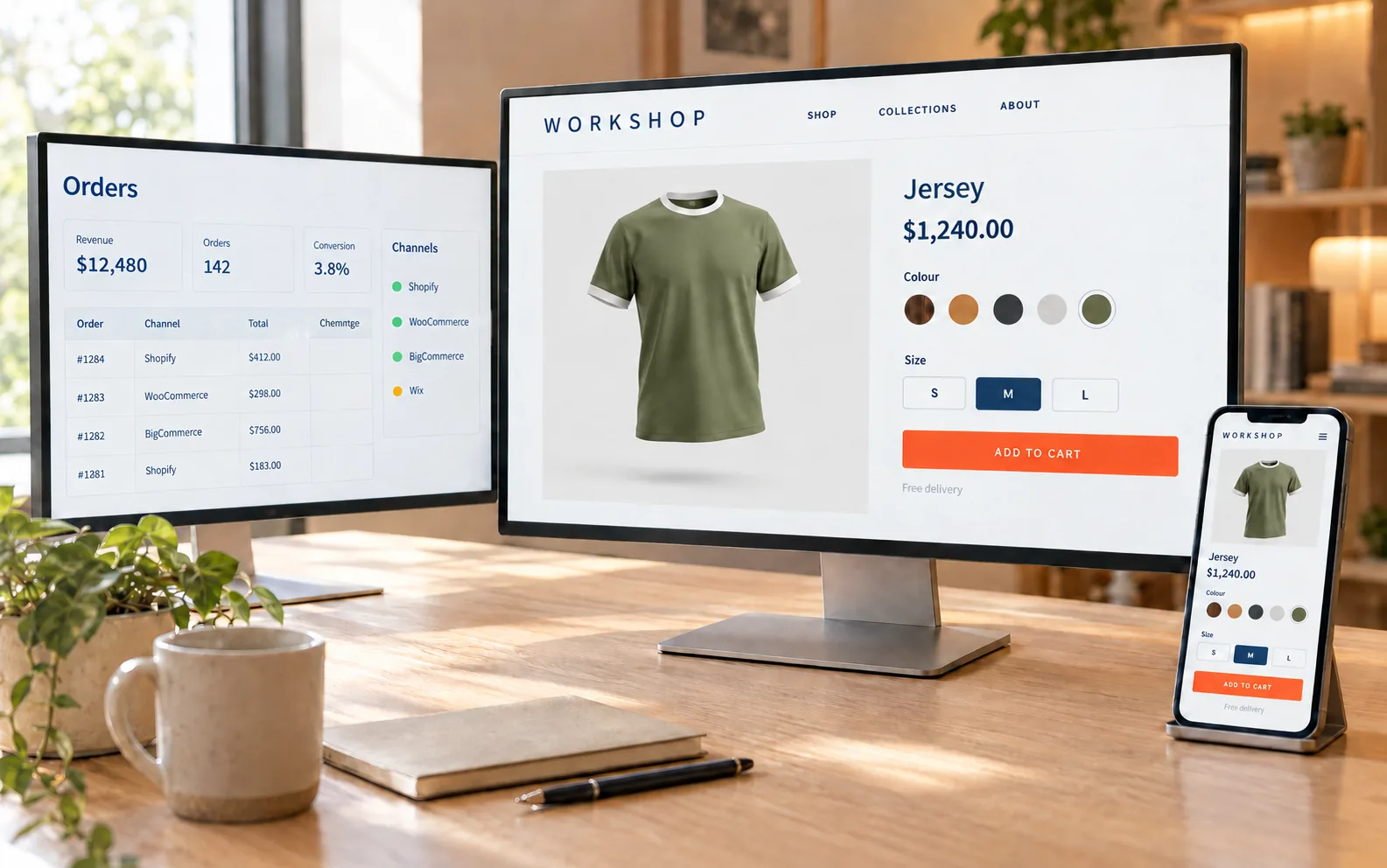
Meeting merchants where they already are
- Shopify apps. Embedded admin apps, theme app extensions, checkout UI extensions, Shopify Billing, webhooks, and the review process that stands between you and the App Store listing.
- WooCommerce plugins. Properly structured WordPress plugins that pass wordpress.org review, survive theme conflicts, and update cleanly.
- BigCommerce and Wix apps. Both marketplaces, both OAuth flows, both reviews.
- Headless commerce. Storefront API integrations when a merchant has outgrown a themed store.
- Subscription billing that reconciles — trials, upgrades, downgrades, proration and cancellation, through Stripe or the platform's own billing.
The parts teams underestimate
Marketplace review is a real engineering requirement, not an afterthought: performance budgets, mandatory webhooks, GDPR endpoints, accessibility, and strict rules about what an embedded app may do. Billing is the other one — trials, plan changes and refunds create edge cases that quietly leak revenue if they are not modelled properly from the start.
Common questions
Can you get our app listed on the Shopify App Store?
Yes — the build is done against the review requirements rather than retrofitted to them, which is what usually causes rejections. That includes performance budgets, mandatory webhooks and GDPR endpoints.
Do you build for WordPress and WooCommerce too?
Yes, including plugins structured to pass wordpress.org review and to survive the theme and plugin conflicts that come with the WordPress ecosystem.
Can one product cover several platforms?
Usually. A shared core with thin platform-specific adapters is the normal shape, and it is far cheaper than maintaining separate products — provided it is designed that way from the start.
Who handles merchant billing?
Shopify requires its own billing API for apps sold through the store. Elsewhere Stripe is the usual choice. Either way the ledger is built to reconcile against actual payouts.
Tell me what your customers should be able to design.
If your process today is an email, a sketch, and somebody rebuilding it by hand afterwards — that's the problem I work on.
or email [email protected]